
The third and final part of the encyclopedia, from M through W. It includes the landmark decks that shaped tarot history: Marseilles, Rider-Waite, Visconti-Sforza, and Oswald Wirth, alongside modern takes such as Motherpeace.
Mandala
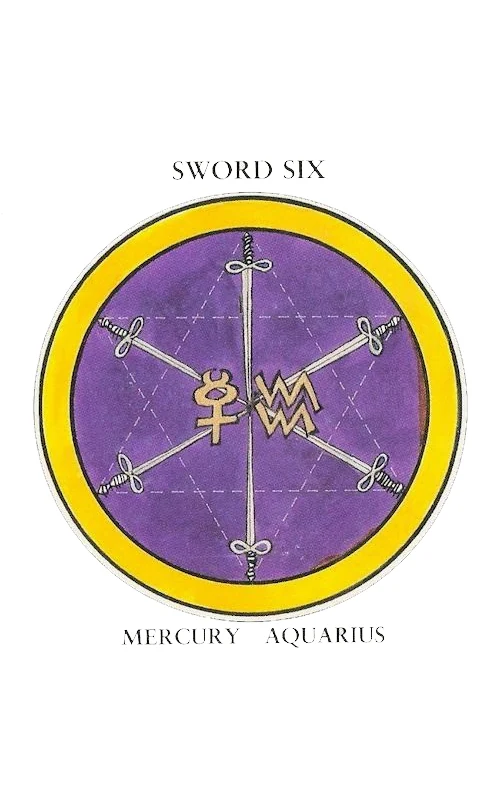
The Astrological Mandala Tarot is unusual for several reasons. First, there is no human figure anywhere in the deck, not even on the court cards. Their shape is also different: they are perfectly square, so they face each of the four cardinal directions equally. Interpretation depends on which way the card is "facing," based on the astrological symbolism of that direction. Specifically: "...the upright card means someone is consciously aware of the quality the card describes... when it is reversed it means the quality exists only in the subconscious... when it faces left... the quality is part of the personality and expresses itself... when it faces right it indicates the quality is projected onto someone else, or flows from someone else — from the person we love, for example..."
Marseilles
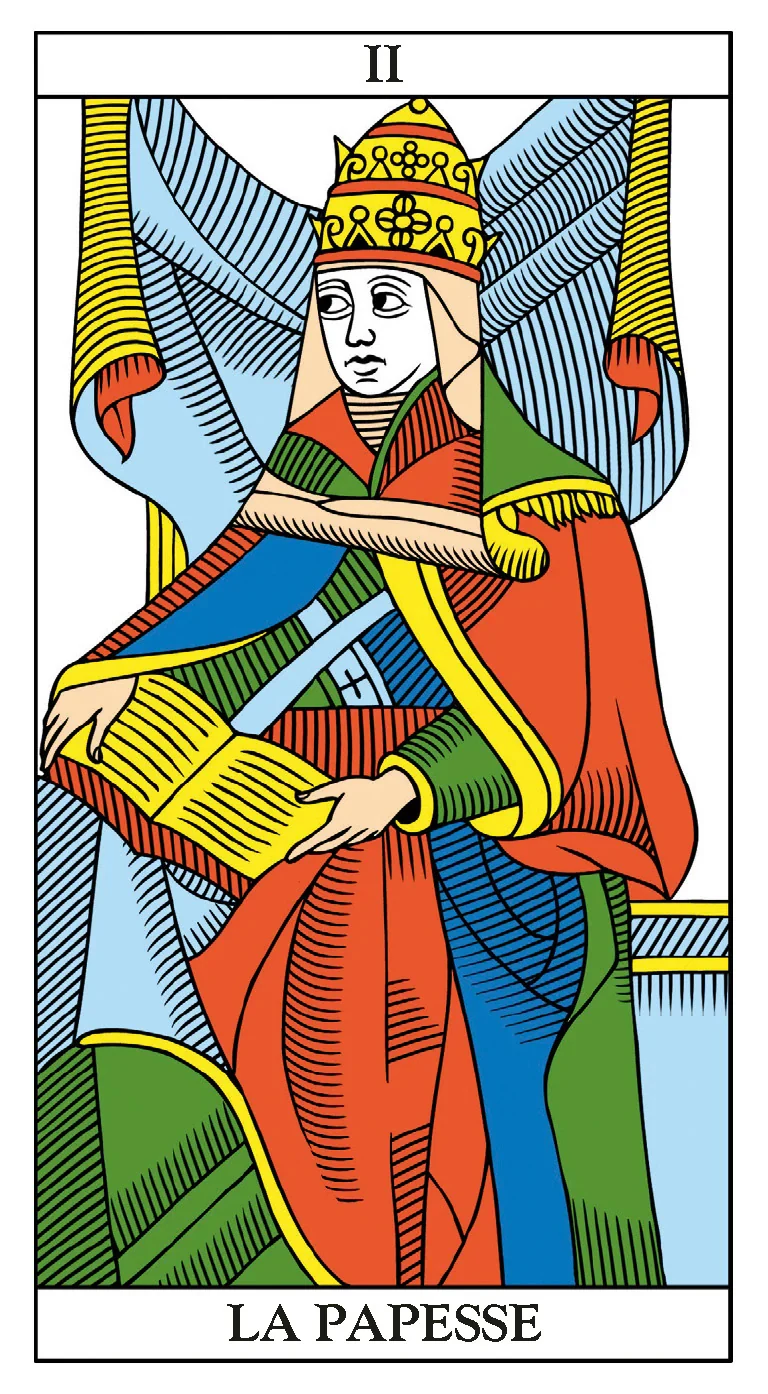
It isn't easy to pin down when or where the Tarot de Marseilles first appeared. The Encyclopedia of Tarot, Volume One, notes: "There are many editions of the Tarot of Marseilles in museums and private collections. The Tarot of Marseilles, wherever it was issued in Europe, gives the Major Arcana names in French, and the Minor Arcana figures have only one head, rather than the double-headed ones found on the Italian decks of Piedmont."
Kaplan places the Marseilles deck somewhere between the 18th and 19th centuries. It circulates today in several variants. Some of the older card readers learned on this deck, since it was one of the few available commercially. Some of them consider it to be the "real" tarot, and regard everything that followed as a bastardized revision. A number of books on tarot — even advanced ones — use the Marseilles as illustration, thanks to the clarity of its symbolism. Here the Fool has no number and Death is not named. The designs are spare and linear, suitable for reproduction by old woodblock printing techniques. The colors are usually limited. The Swords and Wands confuse at first — the only thing that tells them apart is the curve of the swords. Today you can find copies in a wider range of colors.
Motherpeace
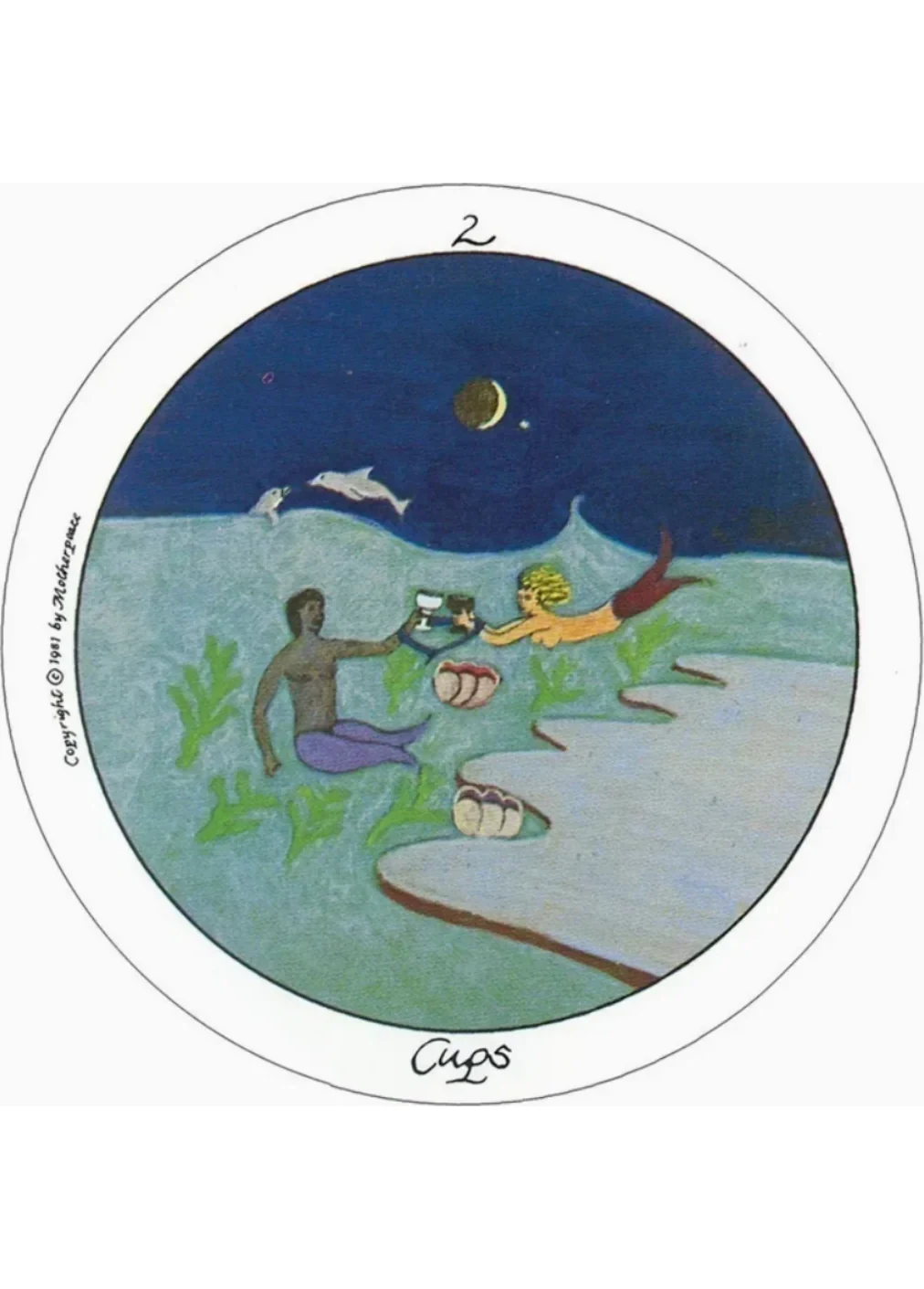
Motherpeace was designed in 1981 by the Americans Karen Vogel and Vicki Noble in Berkeley, California, drawing on the Goddess movement and second-wave feminism. It is the best-known women-centered tarot deck and has been in continuous print ever since.
The circular card format — unprecedented for a tarot deck — is not a decorative choice: it is a deliberate break from the rectangular, "masculine" geometry of traditional decks and symbolizes female fertility. The 78 cards were painted by Vogel in a style reminiscent of folk illustration, with black outlines and flat colors.
The Minor Arcana combines four different cultural traditions: the Cups draw on Minoan Crete, the Wands on African worship, the Discs on Navajo culture, and the Swords on Greco-Roman antiquity. Vicki Noble wrote the accompanying book, Motherpeace: A Way to the Goddess Through Myth, Art and Tarot, considered a key text of 1980s feminist occult literature. In 2017 the fashion house Christian Dior built an entire collection inspired by the deck's visual motifs.
Oswald Wirth
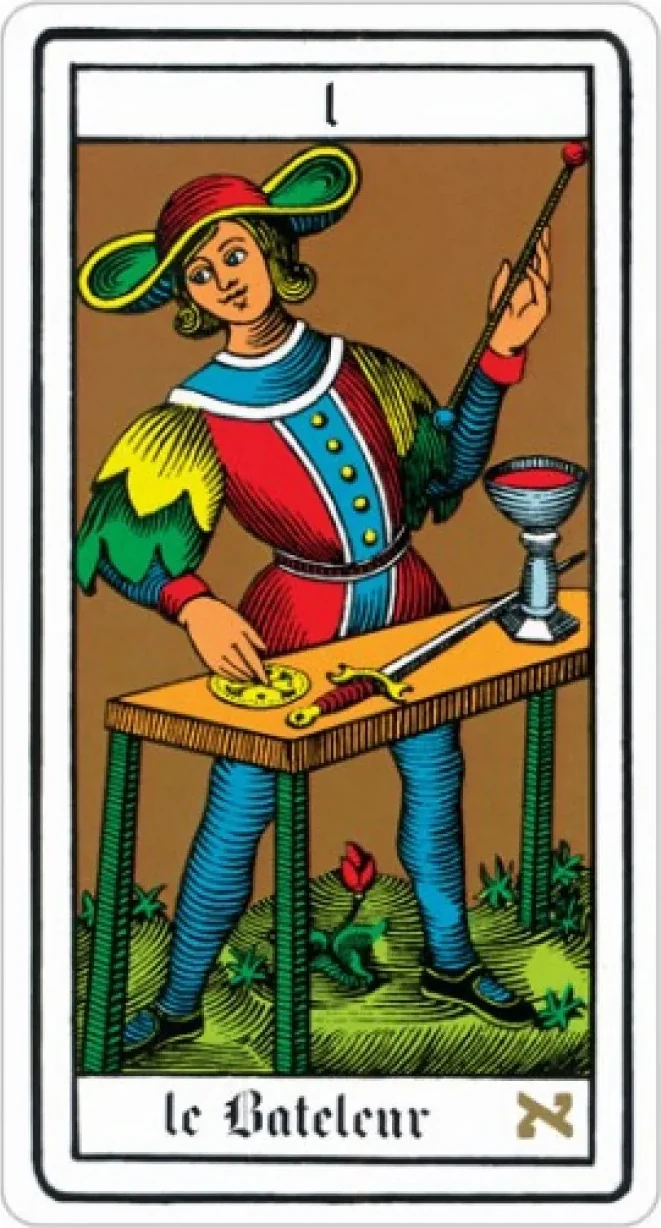
Les 22 Arcanes du Tarot Kabbalistique, known as the Oswald Wirth deck, was published in 1889 in Paris and is considered the first genuinely occultist tarot deck. Wirth (1860-1942), a Swiss-German occultist and personal secretary to Stanislas de Guaita, designed the twenty-two Major Arcana following de Guaita's instructions and the principles of Éliphas Lévi.
The first edition was limited — just 300 hand-colored copies with gilded edges — and accompanied Papus's book Le Tarot des Bohémiens. Wirth followed the structure of the Tarot de Marseilles closely, but layered in esoteric symbolism: Hebrew letters on every card (a first in tarot history), Masonic and Rosicrucian emblems, and alchemical references.
In 1927 Wirth himself wrote the manual Le Tarot des imagiers du Moyen Âge, which remains a classic text for the occult interpretation of tarot. His deck laid the foundations for the later Golden Dawn tradition and the entire English-language mystical school that led to the Rider-Waite and Thoth decks.
Rider-Waite
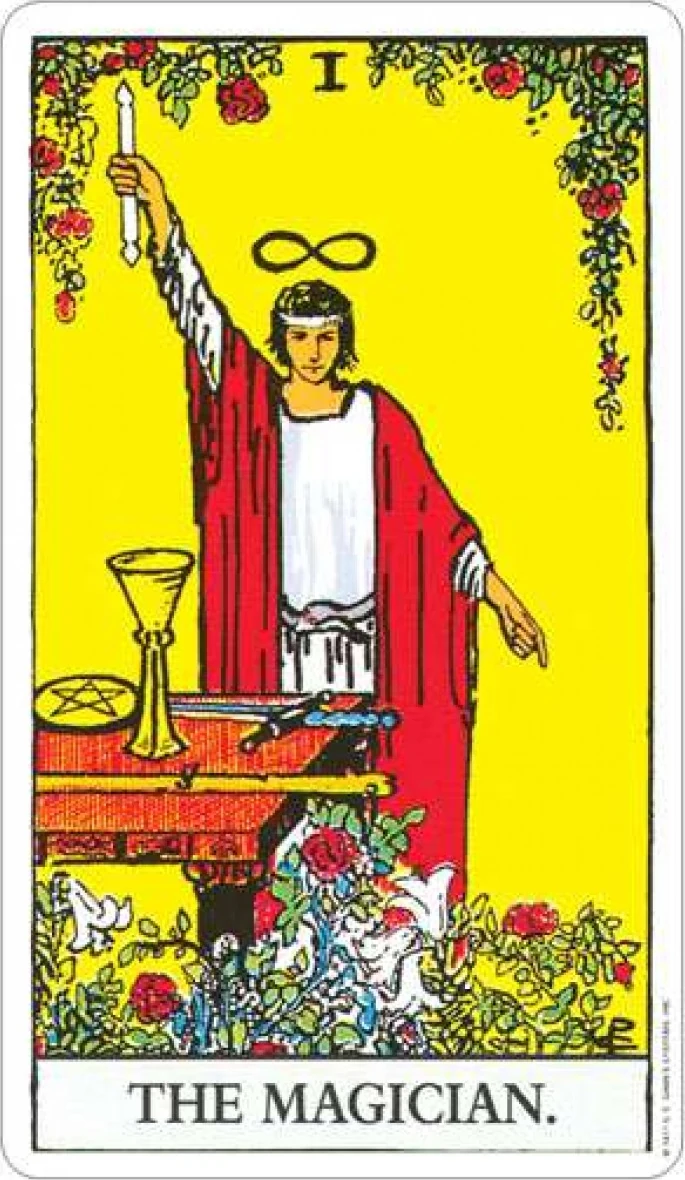
The Rider-Waite deck, first published in 1909 by Rider of London, is the best-known and most influential tarot deck of the modern era. It was designed by the mystic Arthur Edward Waite, a member of the Hermetic Order of the Golden Dawn, and illustrated by the British artist Pamela Colman Smith, who completed all 78 cards between April and October 1909.
Its real innovation lies in the Minor Arcana: for the first time in the history of tarot, every pip card depicts a full narrative scene rather than a plain repetition of suit symbols. This visual choice made intuitive reading more accessible and shaped nearly every tarot deck that followed. Waite published the companion guide The Key to the Tarot (1909) and later the fuller Pictorial Key to the Tarot (1911).
The Universal Waite edition, recolored by Mary Hanson-Roberts, is today the most widely circulated variant. Estimates put sales at over 100 million copies across more than 20 countries — a figure that makes it the best-selling tarot deck of all time.
Visconti-Sforza (Cary-Yale)
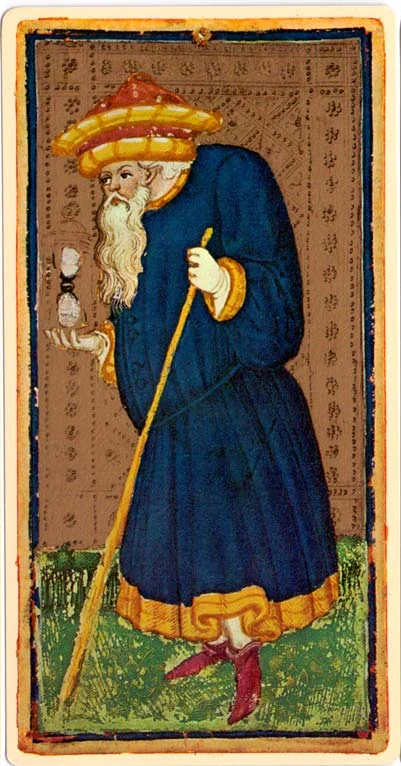
The so-called Visconti-Sforza decks are a group of about fifteen incomplete 15th-century sets and the oldest surviving tarot cards. They were originally commissioned by Filippo Maria Visconti, Duke of Milan, and later by his successor Francesco Sforza, and reflect the lavish character of the Italian Renaissance court.
The specific set known as the Cary-Yale or Visconti di Modrone is now dated to 1441-1442, based on recent watermark analysis that links it to the betrothal of Bianca Maria Visconti to Francesco Sforza. It is held at the Beinecke Rare Book and Manuscript Library at Yale University. Of the original 86 cards, 67 survive.
The artwork has traditionally been attributed to the Northern Italian artist Bonifacio Bembo and his workshop, though more recent scholarship suggests involvement by his older brother Andrea. The cards are decorated with gold leaf, colorful noble costume, and the coats of arms of the two houses. The deck was not designed for divination but as a courtly game, which preserves its historical value as an early specimen of tarot before it was ever taken up by the mystical traditions.
The Witches (Ellen Cannon Reed)
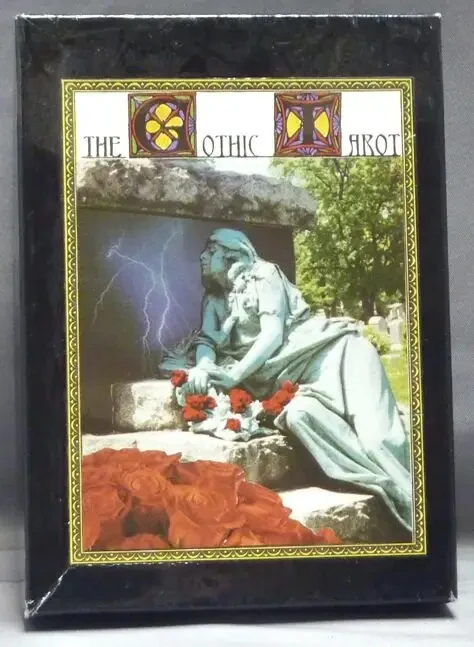
This is the first time a tarot of this kind has appeared. Ellen Cannon Reed, who believes in paganism and Kabbalistic theory, created the Witches Tarot, and the artist Martin Cannon — following her detailed descriptions — drew the cards, capturing the essence of every symbol. The images are beautiful and inspired. The Minor Arcana has been designed in a singular symbolic way that offers a modern reading. There are new symbols in the Major Arcana too: there is no Devil, no Hierophant, no Hermit. Instead there is the Honored, the High Priest, and the Seeker. All the Magical Spheres are included, in striking colors, on the corresponding cards. It is the perfect tarot for pagans, witches, and Kabbalists. If we had to find a fault, we would note that every human figure is "perfect" — strikingly attractive women and men who look like they spend all day at the gym.
We also wonder whether the artist started to tire by the time he reached the courts, since the Princess, Prince, Queen, and King of each of the four suits are identical — only the color and the suit's symbol change. Still, it reads easily and is, therefore, suitable for beginners.
Part I (A–D) and Part II (E–J) come first.
Part I (A–D) · Part II (E–J)
No comments yet. Be the first to comment!