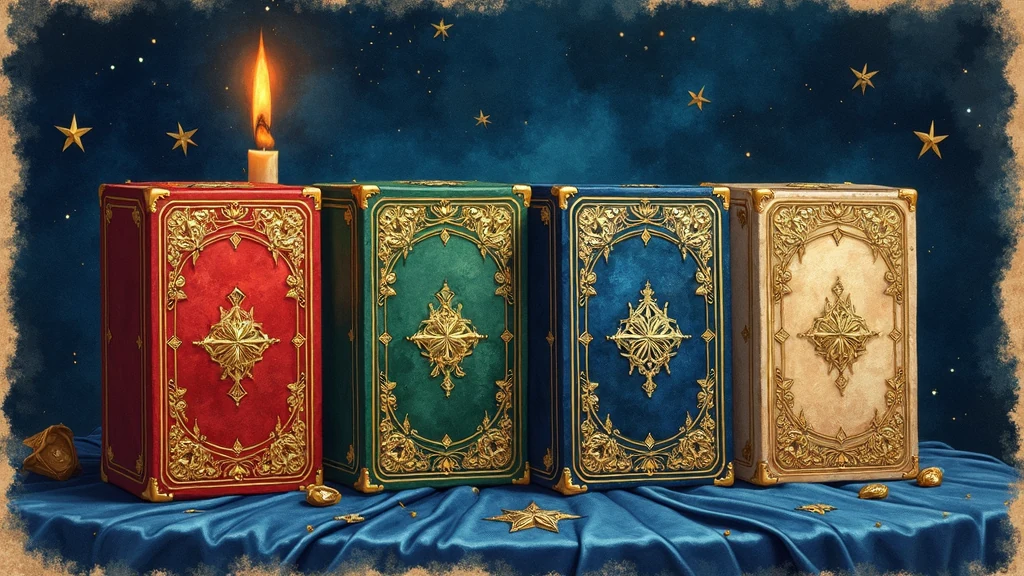
The tarot encyclopedia continues, from E through J. This part gathers decks with a strongly thematic or mystical orientation — Egyptian iconography, feminist reworkings, Gothic aesthetics, Germanic symbolism, and psychoanalytic readings inspired by Jung.
Egyptian
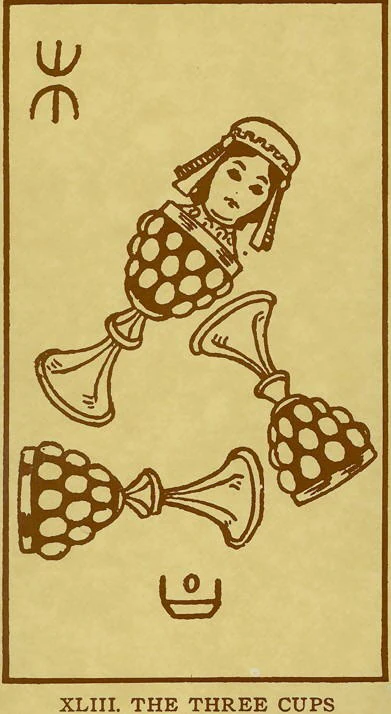
The Egyptian Tarot is based on the illustrations in Practical Astrology by Comte C. de Saint-Germain, published in 1901. Various names were given to the book's images that weren't part of the text itself. The designs are done in brown pencil on a specially made paper that resembles papyrus. Egyptian culture and mythology strongly influence the card names — The Chariot of Osiris, Sphinx, and so on. The Fool has the number 22 — the Crocodile. Unlike most tarot decks, the Minor Arcana cards are also numbered, from 23 to 78. The court cards are the Master, the Mistress, the Warrior, and the Slave. The Wands are called Scepters. The back design features the famous funerary mask of Pharaoh Tutankhamun.
Magician (1), Gate of the Sanctuary (2), Iris-Urania (3), Stone Cube (4), Master of the Arcana (5), Two Ways (6), Chariot of Osiris (7), Scales and Sword (8), Veiled Lamp (9), Sphinx (10), Tamed Lion (11), Sacrifice (12), Reaping Skeleton (13), Two Urns (14), Typhon (15), Lightning-struck Tower (16), Star of the Magi (17), Twilight (18), Dazzling Light (19), Resurrection of the Dead (20), Crown of the Magi (21), Crocodile (22)
Goddess
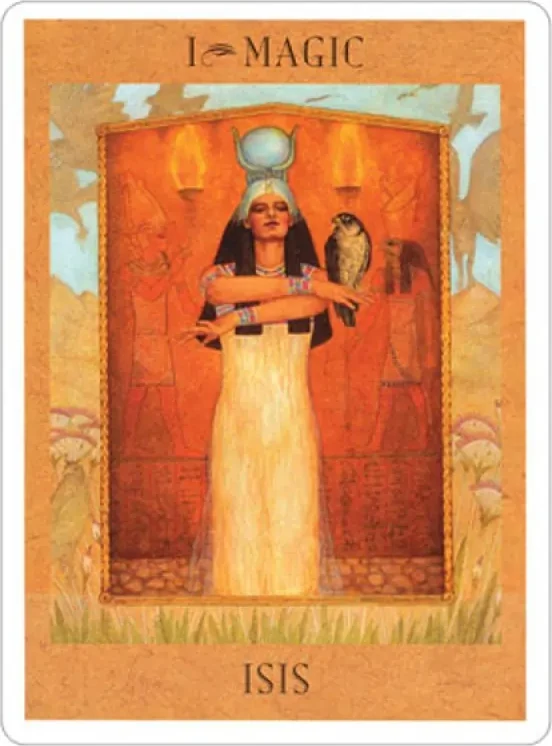
This deck was designed by Kris Waldherr and combines old elements with new ones. Waldherr is well known for her paintings of female deities, which she presents in her book The Book of Goddesses, as well as for illustrations she has done for other books and calendars. The Major Arcana is not the traditional one — many cards have been renamed. The goddesses come from various cultures.
0 - Beginning: Tara; I - Magic: Isis; II - Wisdom: Saraswati; III - Fertility: Estsanatlehi; IV - Power: Freyja; V - Tradition: Hera; VI - Love: Aphrodite; VII - Movement: Rhiannon; VIII - Justice: Athena; IX - Contemplation: Chang O; X - Fortune: Lakshmi; XI - Strength: Oya; XII - Sacrifice: Kuan Yin; XIII - Transformation: Ukemochi; XIV - Balance: Yemaya; XV - Temptation: Nyai Loro Kidul; XVI - Oppression: The Wawalak; XVII - The Star: Inanna; XVIII - The Moon: Artemis; XIX - The Sun: The Zorya; XX - Judgement: Gwenhwyfar; XXI - The World: Gaia.
Every card has a central scene surrounded by a decorated frame, which in turn is surrounded by a second frame. In the Minor Arcana the border represents a landscape shared across the cards of each suit. In the Major Arcana each card has its own border, representing themes connected to that particular goddess. Around it there is a light brown frame, and around that a white border.
Gothic
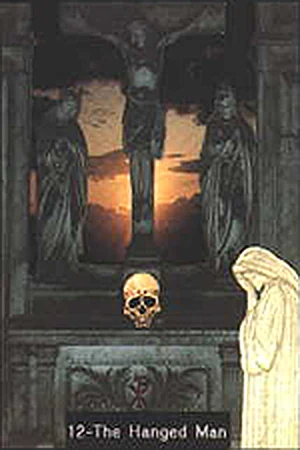
This deck is built from photographs of cemeteries around the world, arranged as collages with color treatment. The cards are squarer than usual. Their border is black. They keep the traditional names with the exception of 0 - Innocence, 10 - Opportunity, and 15 - Deception. Cemetery sculptures typically depict angels, so there are a great many angels in this deck. Plenty of color has been added to break the dominance of the statues' gray. The black borders and weather-eroded stones, combined with the skulls and blood-red roses — along with drops of blood that appear on some cards — give a "Gothic" feel. The creator of this deck has also produced the Necronomicon Tarot.
Haindl
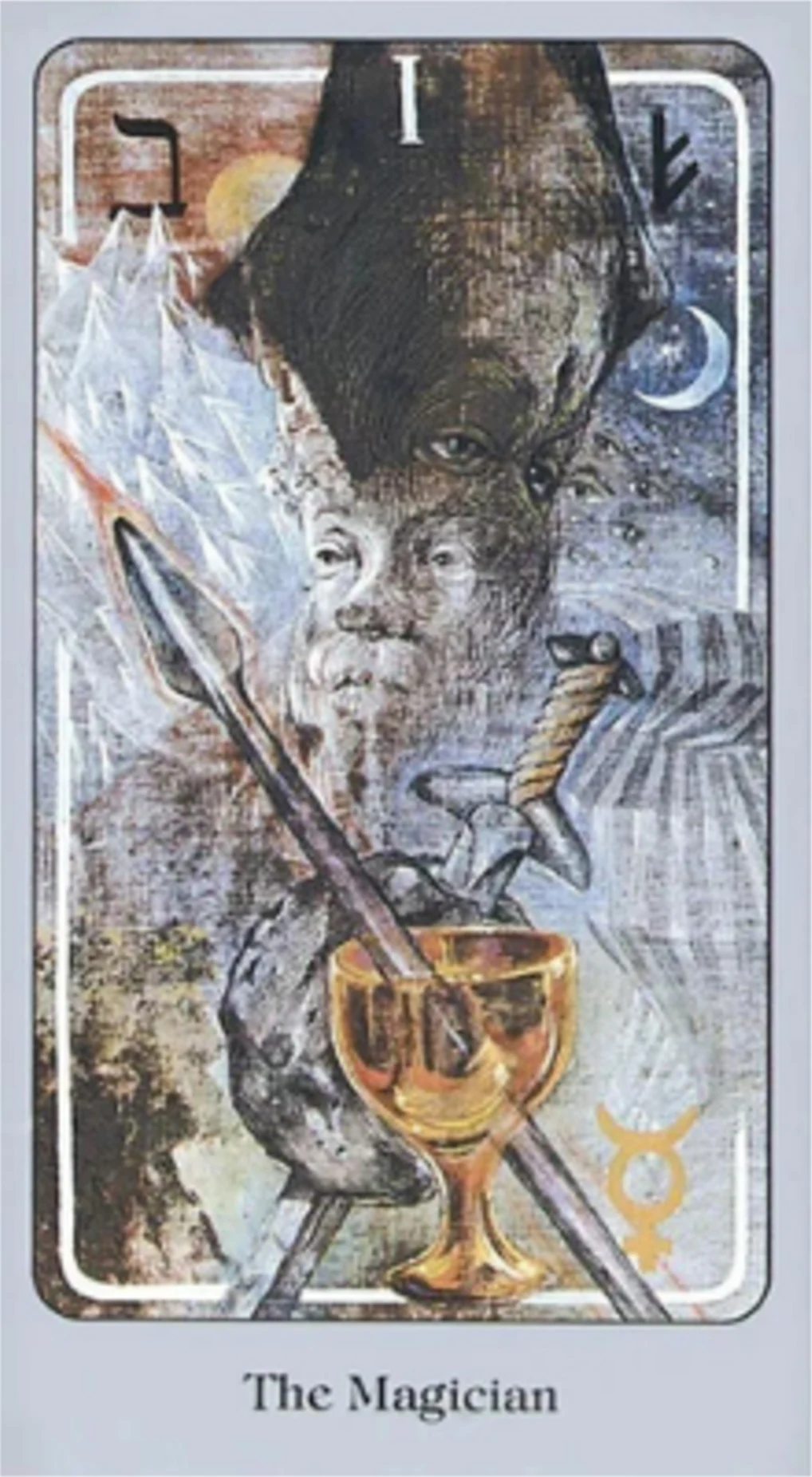
This deck was designed by German artist Hermann Haindl and does not follow tradition. The interpretive keyword used by the Golden Dawn is present, but there is no image that recalls the familiar Waite-Smith tradition. Every card of the Major Arcana carries the corresponding Hebrew letter, the zodiac sign or planet associated with it, and a rune. The Minor Arcana cards carry the I-Ching image. The court card names include the traditional term but within a phrase — "Son of the Wands of the East," for example — and are linked to mythical figures, gods and goddesses from different cultures.
The artwork is extraordinary. The cards imitate the texture of canvas. The depictions, however, are all dark. The dominant colors are brown and gray. When other colors appear in the background, dark and melancholy shades are chosen. There are some bright touches, but not enough to undo the sense of desolation and sorrow that pervades the whole deck. Each suit of the Minor Arcana has its own border color: vivid blue-green for the courts, red (fire) for wands, white (air) for swords, blue (water) for cups, and yellow (earth) for pentacles.
Halloween
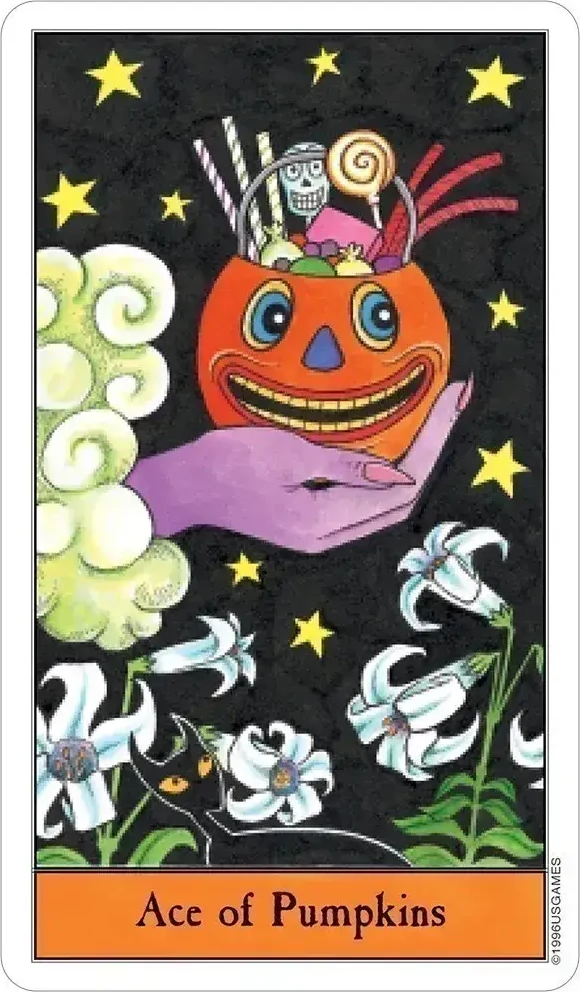
This deck could fairly be titled "The Nightmare Before Christmas," and indeed the artist admits that horror films are his favorite pastime. Artistically the illustration is polished, though the colors seem to play second fiddle — they can't really compete with the deck's central theme. Black and orange dominate. The four suits of the Minor Arcana have been rebranded: Weeds instead of Wands, Ghosts instead of Cups, Bats instead of Swords, Pumpkins instead of Pentacles. Otherwise the names match those of the Waite-Smith deck. The images follow the classic interpretation but mix in horror-film themes. For example, the Emperor and Empress are Frankenstein and the Bride of Frankenstein.
Every card has a black cat that is easy to spot — except the 8 of Weeds, where you have to look hard to find it. Some of the interpretations are genuinely clever, like the Mummy standing in for the Hierophant, signifying "bonds imposed by external constraints that religious dogma and social expectations place on us," while others are superficial. The Lovers show a maiden being menaced by a vampire, with the explanation asking "Can a vampiric visitor corrupt true love?"
Hermetic
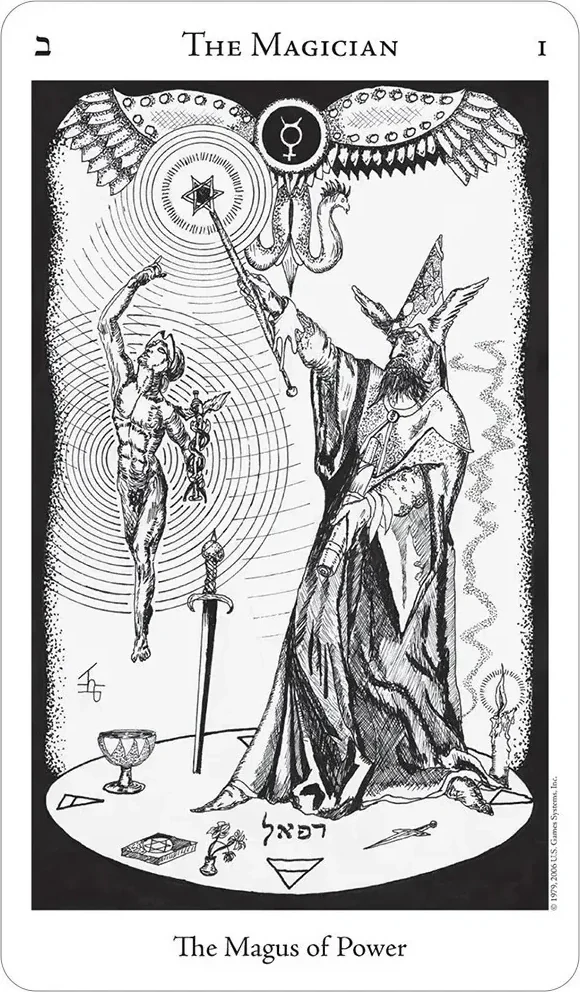
The black-and-white Hermetic Tarot is based on the inner teachings of the Hermetic Order of the Golden Dawn, according to Godfrey Dowson, the artist who reconstructed the deck. The original drawings were made between 1975 and 1977 in Wales. Dowson drew heavily on the work of many occultists, including MacGregor Mathers, Aleister Crowley, and Paul Foster Case. The deck combines Tarot, Kabbalah, and Astrology following the Order's prescriptions. Every card is a dense composition of symbolism and detail.
Jungian
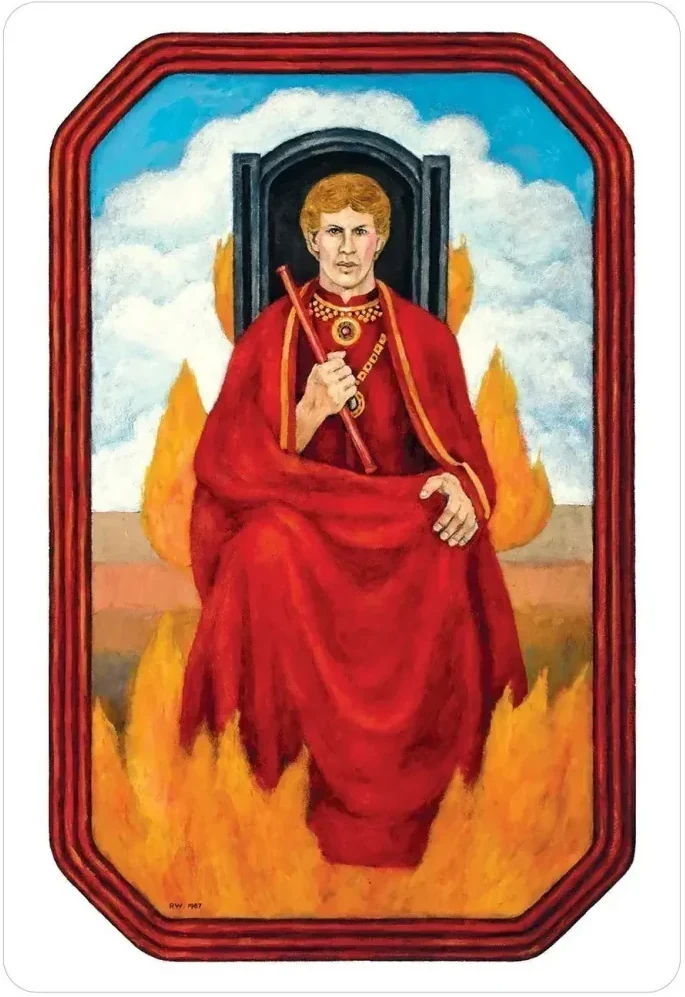
This deck was designed by Robert Wang and is based on the archetypes of Carl Jung. The accompanying introduction reads: "The Jungian Tarot is a set of archetypal images, carefully designed to be used in a process that Carl Jung, one of the founders of psychoanalysis, called active imagination." Wang is a skilled artist and his illustrations are polished. There is more detail here and more vivid colors than in the Golden Dawn Tarot that he also designed. The card backs are strikingly beautiful and are one of the deck's strong points. The Major Arcana stays faithful to tradition, but each card carries an archetype and a mandala that symbolizes an aspect of the self. The court cards are King, Queen, Prince, and Princess, each linked to an archetype. From Ace through
Ten there are no scenes, although the use of a specific color is symbolic. Each card is linked to an astrological element. Here Wang innovates, mapping the planets to the numbers and the zodiac signs to the suits and the court cards of the Minor Arcana. Anyone with basic astrology will have no trouble picking up his system.
Part I (A–D) comes first, Part III (M–W) follows.
Part I (A–D) · Part III (M–W)
No comments yet. Be the first to comment!