
A reference guide to some of the most important and distinctive tarot decks, from A to D. Not a book of meanings — a map through the vast range of artistic takes on tarot: who created each deck, when, in what style, and what makes it notable.
Aquarian
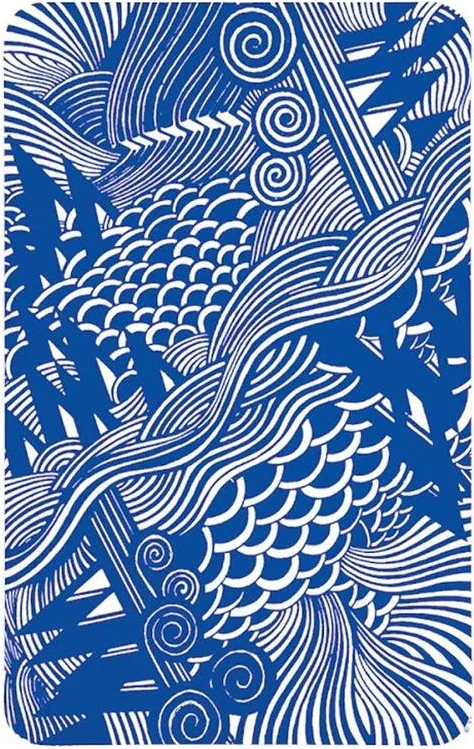
The Aquarian Tarot is a popular deck designed by David Mario Palladini in the early 1970s. As he tells it, someone walked into his painting class at a New York art school and asked him to design a tarot deck. The result blends an art deco style with medieval imagery.
Arthurian
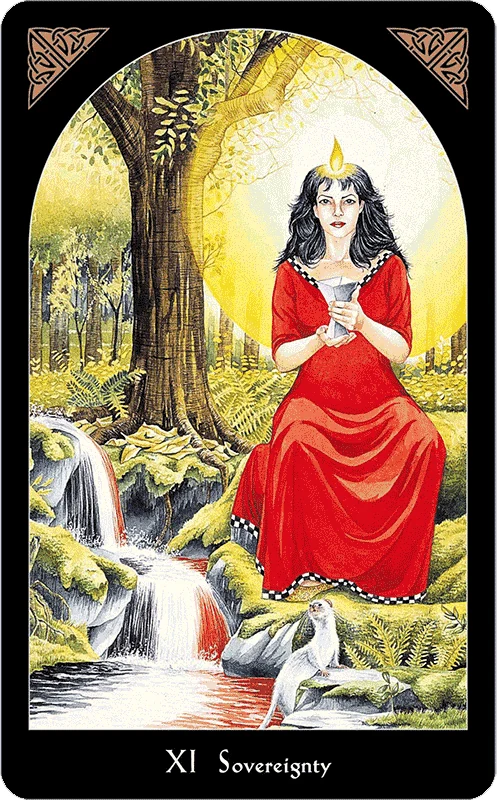
A themed deck built around the legend of King Arthur and the knights of the Round Table. The artwork is strong, set in a black frame that gives the impression of looking through a window or gate. The Major Arcana has been renamed to fit the legend: 0 - The Seeker, I - Merlin, II - The Lady of the Lake, III - Guinevere, IV - Arthur, V - Taliesin, VI - The White Hart, VII - Prydwen, VIII - Gawain, IX - The Grail Hermit, X - The Round Table, XI - Sovereignty, XII - The Wounded King, XIII - The Washer at the Ford, XIV - The Cauldron, XV - The Green Knight, XVI - The Spiral Tower, XVII - The Star, XVIII - The Moon, XIX - The Sun, XX - The Sleeping Lord, XXI - The Flowering of Logres. The Minor Arcana is also reworked — the Aces evoke the quest for the Holy Grail, and none of the pip cards carry their suit's rank in plain form.
Celtic
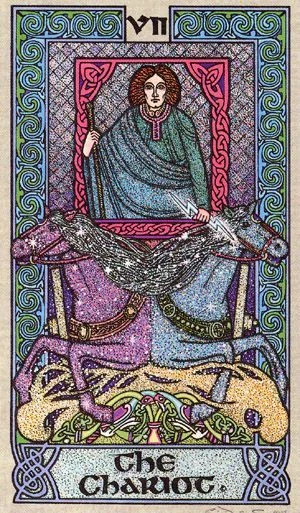
This deck was designed by an artist who knew nothing about tarot when he started. He seems to have taken the Waite-Smith deck as a model for the Major Arcana, but added quite a few touches that don't fit the tone. The Major Arcana cards and the end-of-suit Minor Arcana cards keep the Waite-Smith names. The artwork itself is genuinely beautiful: the colors are very clean and the backgrounds are richly detailed. Around the card, instead of a single background color, the artist uses labyrinths, knots, or spiral patterns. In the Major Arcana the symbolism shifts in an effort to make the deck more Celtic, so there are fewer symbols per card. The Minor Arcana is divided into Coins, Wands, Swords, and Cups. Their depiction on the deck is very detailed. The Coins are discs with gilded knots on a green background
with light-blue knots around the rim. The Wands are staves with detailed carvings on a white-beige background. Every Wand card has at least one sun in the background. The Cups have blue knots for a background with a gold rim, and the Swords have pink, orange, and yellow backgrounds that look better than they sound. Many of the Swords also have a kind of mist in the background.
Crowley (Thoth)
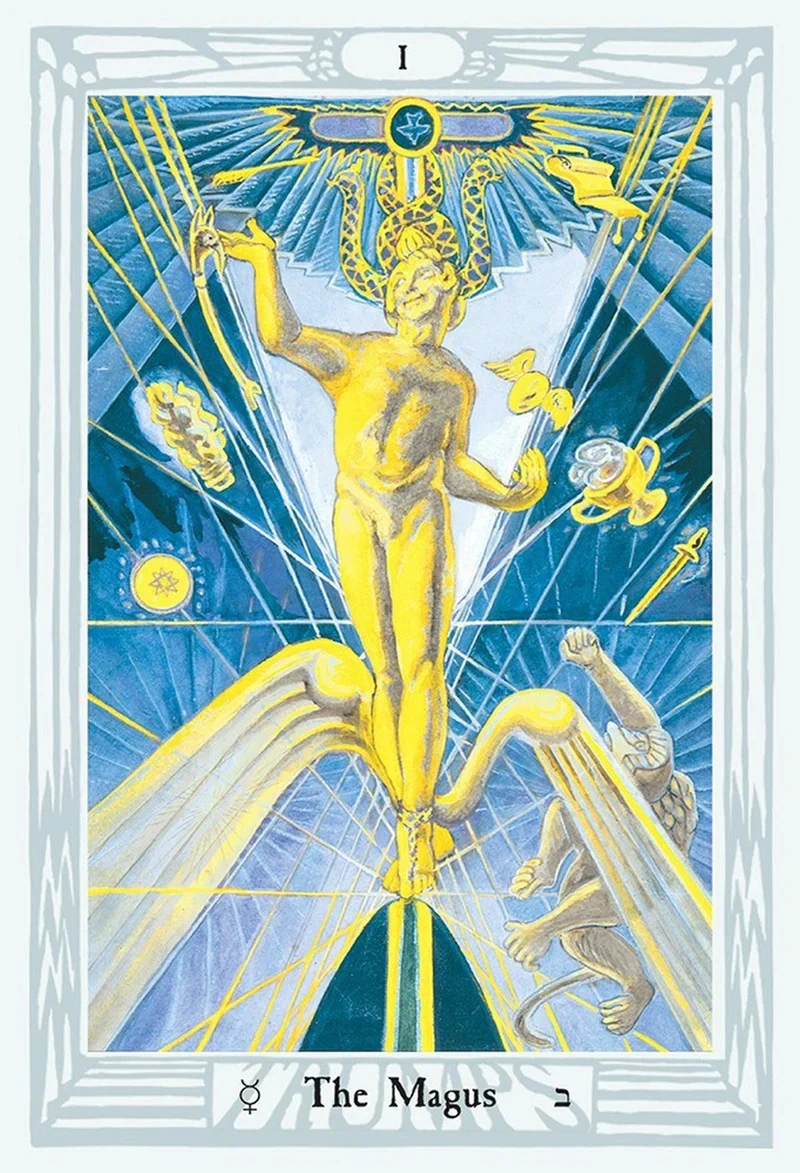
The Thoth deck tends to provoke strong emotional reactions from those familiar with it. It is rich in symbolism, and even someone who knows little or nothing about tarot can work out how a card should be read by looking at its imagery and the interpretive keywords it carries.
The Major Arcana departs radically from Waite-Smith. Several cards have been renamed to fit Crowley's theoretical system: Strength becomes Lust, Temperance becomes Art, and Judgement becomes Aeon. The court cards are Knight, Queen, Prince, and Princess — the Thoth Knight is the equivalent of the King. There are no pictorial scenes in the Minor Arcana. Even so, the suit symbols are not a random or arbitrary decorative arrangement: every design carries interpretive weight. For example, Luxury (the Four of Cups) shows golden cups overflowing. Unfortunately the heavy negative publicity around Crowley has tagged this deck as
"satanic" or "dark." Powerful would be a better word. It isn't suitable for beginners unless they have someone willing to teach them. You can of course use it for readings without a problem, but this deck rewards deeper study. A working knowledge of astrology and Kabbalah is equally useful for getting the most out of it.
Dali
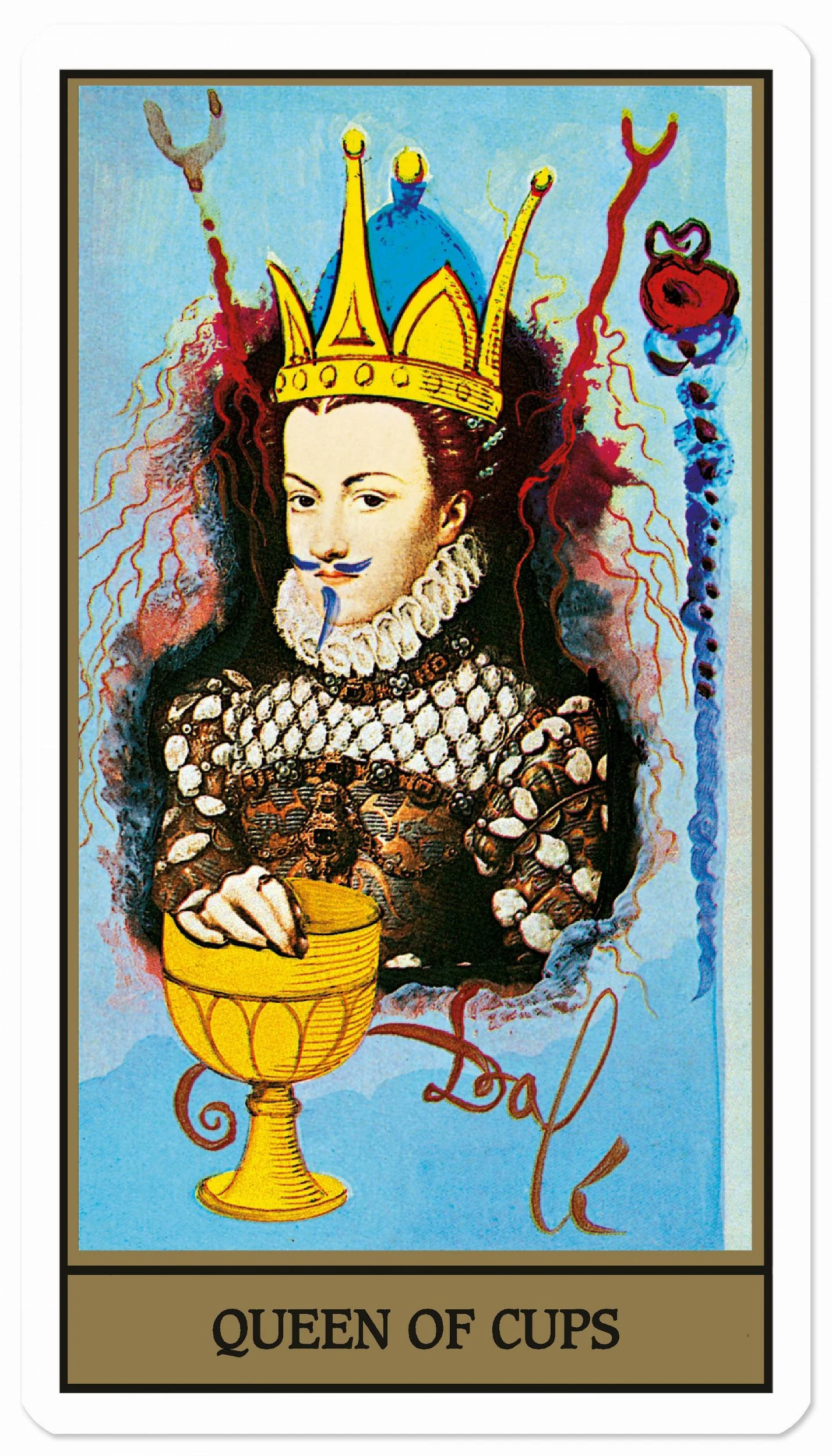
A beautiful deck, but I wouldn't call it Dali's best work. He seems to cut corners, pulling in other pieces of his own output, photographs, and simple drawings rather than designing a deck from scratch. The Major Arcana keeps the standard names, though with somewhat different designs. The Minor Arcana is a little harder to read because it isn't numbered. It isn't a Waite/Smith clone where the Minor Arcana is concerned — the subject matter is entirely different. The lack of explanation doesn't help, since the accompanying booklet isn't particularly detailed.
Dragon
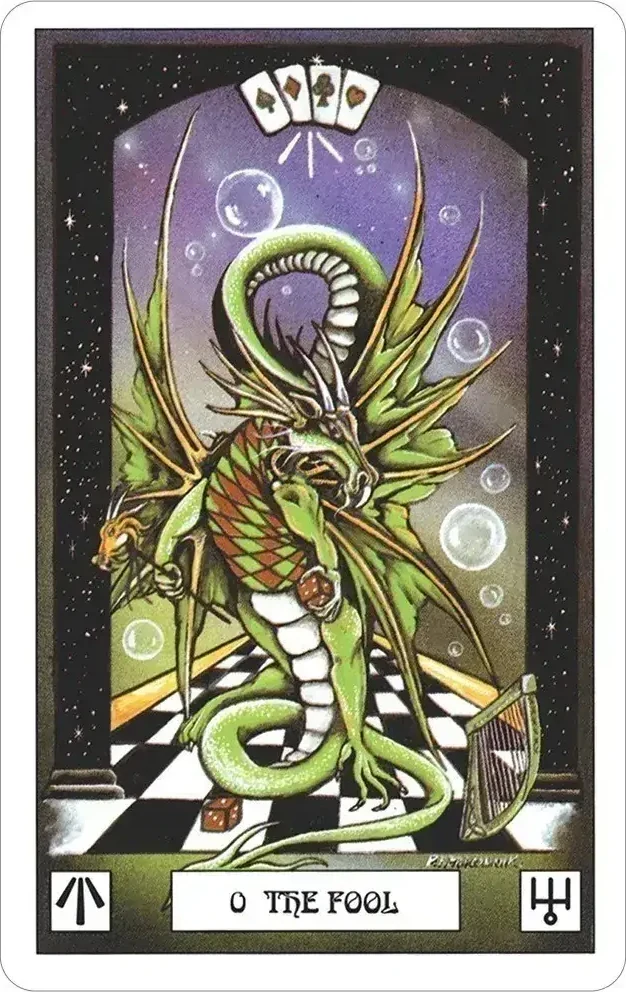
The Dragon Tarot is the brainchild of writer Terry Donaldson, designed by artist Peter Pracownik. A dragon appears on every card. These are neither "cute" dragons nor terrifying reptiles — they come across as rather likeable, shown in various colors, and some are even pink. Artistically the work is polished, with plenty of detail. Every card has a large central dragon against a backdrop of some landscape, always in dark tones. In the Major Arcana an effort was made to incorporate the traditional symbolism: Justice appears as a dragon with scales in its mouth, the Hermit shows a dragon holding a lantern, and the Magician has the symbols of the four suits along with the symbol of eternity. The Minor Arcana cards feature a scene, but the large central dragon tends to overshadow the background image. The symbols for Wands and Pentacles differ somewhat.
The Wands are represented by a lantern at the end of a beam, and the Pentacles are gray labyrinths with a large red pentagram laid over them, its points extending beyond the edge of the circle.
The encyclopedia continues in Part II (E–J) and Part III (M–W).
Part II (E–J) · Part III (M–W)
No comments yet. Be the first to comment!