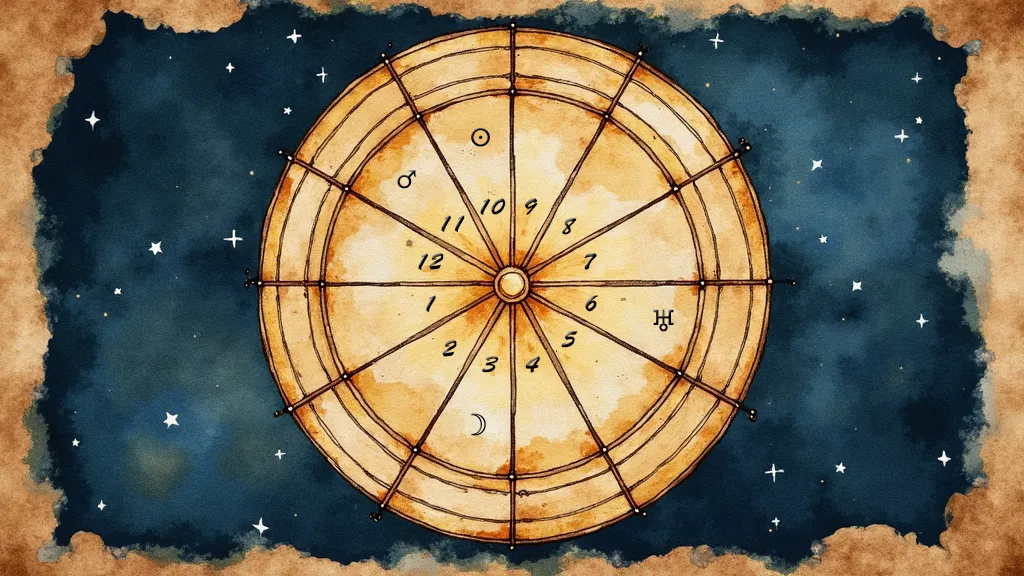
Think of your birth chart as a map of the sky at the exact moment you were born. The planets show what energies are at play. The signs show how those energies behave. But the houses? They show where in your life those energies land — the 12 distinct zones of human experience, from your body and personality all the way out to your dreams, karma, and everything in between.
In This Article
Why Houses Matter — and Why You Need Your Birth Time
Here's the thing most people miss when they first get into astrology: two people born on the same day, in the same city, can have wildly different charts — because they were born hours apart. The signs of the Sun and Moon might be identical, but the houses shift constantly as the Earth rotates. Your Ascendant (the cusp of the 1st House) changes sign roughly every two hours.
That's why birth time matters so much. Without it, astrologers can calculate your planetary positions, but the house picture stays blurry. The more precisely you know your time of birth, the more precisely the houses can do their job — telling you where your Venus, your Saturn, your North Node actually lives in your life.
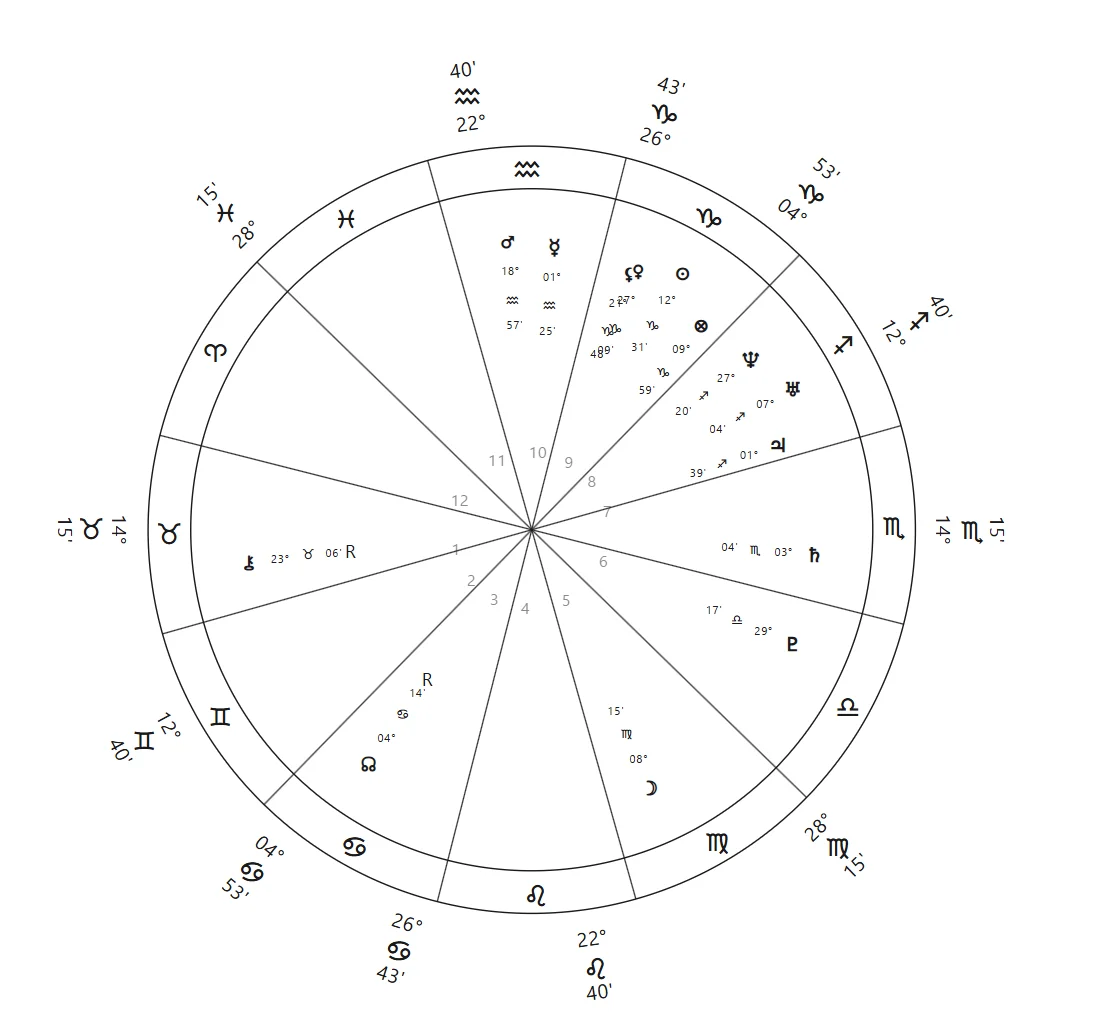
The Angular Houses — Where Life Gets Loud
The angular houses sit at the four cardinal points of the chart — the Ascendant, the IC, the Descendant, and the Midheaven. Planets here tend to be prominent, visible, and active. These are the load-bearing walls of your life.
1st House — Identity & First Impressions
The 1st House is you — your body, your face, the vibe you give off before you've said a word. It's ruled by your Ascendant sign, which colors everything about how you show up in the world. Mars here, for instance, gives someone an unmistakably direct, energetic presence.
4th House — Home, Roots & Family
This is your foundation — literally and emotionally. It covers your childhood home, your family of origin, the private self you rarely show at work, and where you feel most grounded. A strongly placed Moon here often points to someone deeply tied to their heritage or home life.
7th House — Partnerships & Open Enemies
The 7th House governs one-on-one relationships: marriage, long-term partnerships, and yes, open rivals too. Whatever sign is on this cusp often describes the kind of partner you're drawn to — or the qualities you project onto others. Venus here is a classic signature for someone who flourishes in partnership.
10th House — Career, Reputation & Public Life
The 10th House is your public face — your career, your status, how the wider world perceives you. It includes the Midheaven (MC), the highest point in your chart. Planets here don't hide; Saturn in the 10th can mean a slow, disciplined climb to real authority.
The Succedent Houses — What You Build and Hold
Succedent houses follow the angular ones. They're about consolidation — what you gather, build, and sustain after the initial push of the angular houses.
2nd House — Money, Possessions & Self-Worth
The 2nd House covers your personal finances, your possessions, and — deeper than either — your sense of your own value. It's not just about how much money you have, but your relationship with security itself. Jupiter here often brings an expansive, sometimes extravagant approach to income.
5th House — Creativity, Pleasure & Romance
This is the house of play. It rules creative self-expression, romantic flirtation (as distinct from committed partnership), children, and leisure. Sun in the 5th is a classic signature for someone who lights up on stage or lives for their creative work.
Every planet in your chart is an actor. The sign is the costume it wears. The house is the stage it performs on.
8th House — Shared Resources, Transformation & the Unseen
The 8th is the chart's deep water — it covers shared finances (inheritance, taxes, your partner's money), psychological transformation, and themes around death and rebirth. It's not dark for the sake of it; it's just the house that doesn't look away from the harder passages of life. Pluto here intensifies everything it touches.
11th House — Community, Friendships & Future Visions
The 11th governs your social circle beyond the personal — friend groups, organizations, collective causes, and your long-term hopes. It's less about the intimate 1-on-1 of the 7th and more about where you belong in the larger world. Uranus here often produces someone whose social life is eclectic, unconventional, or constantly evolving.
The Cadent Houses — Where You Learn and Let Go
Cadent houses are transitional — they prepare you for what comes next. Planets here are often more internalized, working below the surface rather than making an obvious splash.
3rd House — Communication, Siblings & Local World
The 3rd covers how you think and communicate day-to-day — conversations, writing, short trips, siblings, and your immediate neighborhood. Mercury here is very much at home, lending quick wit and a natural facility with words. It's your local social web.
6th House — Daily Routines, Health & Work
The 6th is the house of the everyday grind — your work habits, health practices, routines, and service to others. It's less about career prestige (that's the 10th) and more about how you actually structure your days. Planets in the 6th often show up in how you manage — or struggle with — your body.
9th House — Philosophy, Travel & Higher Learning
The 9th expands your world: higher education, long-distance travel, foreign cultures, religion, and the big questions you wrestle with about meaning and belief. It's the house of the horizon you're always stretching toward. Jupiter rules here and thrives in it — generous, philosophical, and endlessly curious.
12th House — The Hidden, the Unconscious & Solitude
The 12th is the chart's quiet room — it rules what's hidden, including your unconscious patterns, private fears, spiritual practice, and experiences of retreat or confinement. It has a reputation for difficulty, but planets here often describe deep reserves of inner life that most people never see. Neptune here can point to vivid dreams, spiritual sensitivity, or a creative imagination that needs solitude to flourish.
A Quick Word on House Systems
You might see astrologers mention Placidus, Whole Sign, Koch, or Equal House. These are different mathematical systems for dividing the chart into houses — and they can shift which sign and degree falls on each house cusp. Placidus is the most common in Western astrology and is what AstroKalhas uses by default. Whole Sign, where each house equals exactly one sign, has seen a strong revival particularly in Hellenistic-influenced practice. If you're just starting out, don't let this stop you — pick one system, learn it well, and go from there.
See Your Houses in Your Own Chart
Reading about the 12 houses is a good start, but the real insight comes when you see your planets in your houses. Which house holds your Sun? Where does your Moon live? Is Saturn sitting quietly in your 4th, or is Venus front and center in your 7th?
Create your free natal chart on AstroKalhas and see exactly where each planet falls — with interpretations for every house placement, available in both Greek and English.
No comments yet. Be the first to comment!