
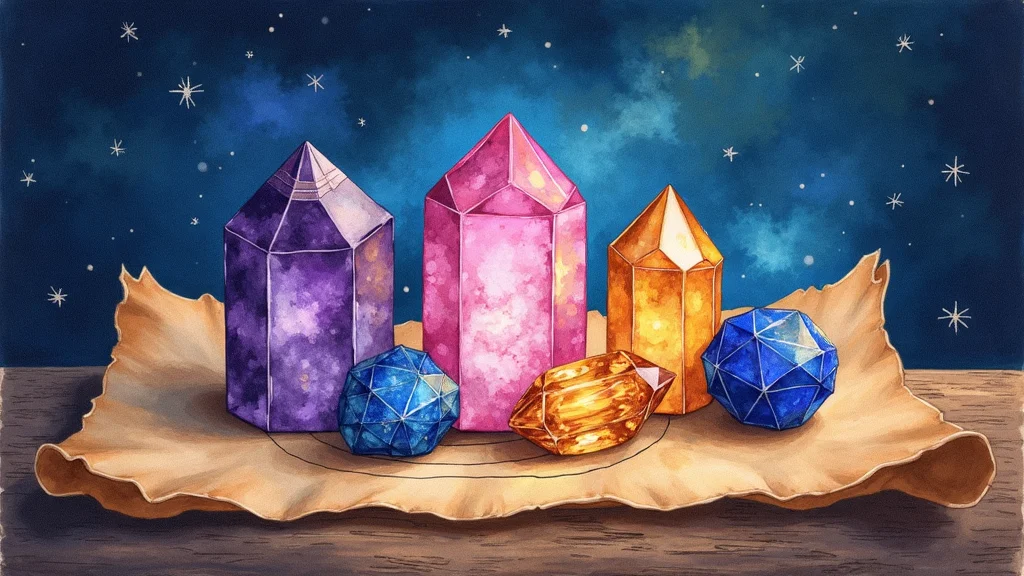
Crystal healing is an ancient practice rooted in the belief that stones and minerals carry unique energies capable of influencing physical, emotional, and spiritual well-being. From the amethyst prized by the ancient Greeks to the turquoise revered by Native American tribes, cultures around the world have attributed healing and protective powers to crystals for thousands of years. Today, crystal healing continues as a popular complementary practice, with practitioners selecting specific stones based on their vibrational properties, color associations, and traditional uses.
Each crystal is believed to resonate at a particular frequency that can interact with the body's energy field, or aura. Practitioners often associate specific stones with the body's chakra system — energy centers that, according to Eastern traditions, govern different aspects of physical and spiritual health. A stone's color, chemical composition, and crystalline structure are thought to determine its therapeutic applications, from calming anxiety to improving mental clarity.
This guide presents an alphabetical overview of crystals, minerals, and gemstones commonly used in healing and spiritual practice. For each entry, you will find a description of the stone, its reputed healing properties, and its spiritual or metaphysical associations. Please note that crystal healing is presented here for informational and spiritual purposes only and should not be considered a substitute for professional medical advice or treatment.
ADAMITE
Description
Adamite is a mineral found in the oxidation zone of zinc ore deposits, named after the French mineralogist Adam. Its composition is basic zinc arsenate, with the chemical formula Zn2(OH)AsO4. It has a hardness of 3.5 and a specific gravity of 4.3–4.4. Part of the zinc is usually replaced by copper or cobalt, and therefore the normally colorless adamite often exhibits various colors, most commonly green. The mineral usually forms very small orthorhombic crystals, often without distinct faces. Its color varies from slightly yellow, greenish, pink, and purple, to a brightly fluorescent yellow-green. Common aggregates of this mineral are botryoidal in shape on smithsonite. Notable deposits are found in France, the ancient mines of Lavrio and Thassos in Greece, Mapimi in Durango State, Mexico, and in Nevada, USA.
ADIPOCERITE
Description
Adipocerite is a rare mineral also known as hatchetite. It is a naturally occurring hydrocarbon mineral with a waxy appearance and greasy texture. Found in coal deposits and sedimentary formations, it has a low hardness and a pale yellow to brownish color. It belongs to the group of organic minerals formed from the decomposition of plant material under geological pressure.
ADINOLITE
Description
Adinolite is a pyroxene metamorphic rock, consisting mainly of quartz and albite. It forms through the contact metamorphism of clay-rich sediments near igneous intrusions and has a fine-grained, compact texture with a characteristic hardness that makes it difficult to break.
AGALMATOLITE
Description
Agalmatolite, also known as pagodite or sculpture stone, is a variety of the mineral talc, or more commonly phyllite or sepiolite. It has been used extensively in China since ancient times as a decorative stone, especially for making figurines. Its properties include very low hardness (1.25 to 2.5), a specific gravity of 2.7, and a white or yellowish-red color. It is so soft that it can be cut with a knife, while it lends itself well to polishing. The Chinese traditionally use it to carve small pagodas and figurines of animals and people, which is how it acquired the names pagodite and sculpture stone. This stone is typically ash-colored or greenish, but often also yellow, brown, or red, or with streaks of these colors. In addition to China, it is found in other parts of the world, including Saxony, in limited quantities within deformed rocks and less frequently within ore-bearing veins. Agalmatolite is not a particularly distinct mineral, as some specimens belong to the pinite group, while others belong to the phyllite or steatite group.
AGARIC MINERAL
Description
Agaric mineral has two main forms. The first is a soft, white variety of limestone that breaks easily between the fingers, found in caves and in cracks in rock formations in areas where groundwater contains a high amount of lime. The second is a variety of magnesium silicate found in Tuscany, known as "Mountain Milk." The bricks made from this variety are so light they float in water. It is believed that the ancient inhabitants of Tuscany also used this material to make floating bricks.
AGATE
Description
Agate is a banded variety of chalcedony, a microcrystalline form of quartz. It is found in a wide range of colors and patterns, with characteristic concentric bands that form in volcanic rock cavities. Agate has been used since antiquity for ornamental purposes, amulets, and jewelry. Its hardness of 6.5–7 on the Mohs scale makes it a durable and versatile gemstone.
Healing Properties
Agate is believed to increase self-confidence, vitality, and energy. It amplifies natural energy and is particularly useful for those who want to develop their competitive instincts.
AGRICOLITE
Description
Agricolite is a mineral consisting mainly of bismuth silicate. It is usually found in very small, tetrahedral crystals of a deep brown or gray color. It has the same chemical composition as eulytine but crystallizes in the monoclinic system with three unequal axes and one oblique bisector. It is also found in the form of spherical aggregates with a radial structure.
ALEXANDRITE
Description
Alexandrite is a rare and remarkable variety of the mineral chrysoberyl, famous for its color-changing properties. In daylight it appears green to bluish-green, while under incandescent light it shifts to red or purplish-red. It was first discovered in the Ural Mountains of Russia in the 1830s and named after Tsar Alexander II. With a hardness of 8.5 on the Mohs scale, it is one of the hardest gemstones.
Spiritual Properties
Alexandrite is associated with renewal and good luck. Its remarkable ability to change color is thought to symbolize transformation and adaptability in life.
AMAZONITE
Description
Amazonite is a green to blue-green variety of microcline feldspar, named after the Amazon River region though not actually found there. It has a vitreous luster, a hardness of 6–6.5, and is found in granitic pegmatites. Notable deposits occur in Colorado, Virginia, Brazil, and Madagascar. It has been used as a decorative stone since ancient Egyptian times.
Healing Properties
Amazonite is believed to soothe and stimulate the nervous system, promoting balance and calm.
Spiritual Properties
Amazonite is associated with success and is thought to help filter out stress and negative energy, encouraging a more positive and determined mindset.
AMBER
Description
Although not technically a stone, amber is created by the fossilization of ancient tree resin over millions of years. Known since antiquity as "elektron" in Greek (the origin of the word electricity) and "kekhrimbar," amber has been prized for jewelry and ornamentation throughout history. In Greek mythology, amber was said to be formed from the tears of the Heliades, the sisters of Phaethon, who wept inconsolably after their brother's tragic death while attempting to drive Apollo's sun chariot across the sky. The gods, moved by their grief, transformed the sisters into poplar trees, and their tears hardened into drops of amber. Amber typically ranges in color from pale yellow to deep orange-brown, and sometimes contains preserved ancient insects or plant matter.
Healing Properties
Some believe that amber may help with disorders of the neck and bronchial area. It is traditionally associated with beauty, health, and overall well-being.
Spiritual Properties
Amber is said to purify and remove negative energies, cleansing the atmosphere of negative vibrations. It is associated with beauty, health, love, and good luck. Its warm, golden energy is thought to promote a sense of comfort, vitality, and protection.
AMETHYST
Description
Amethyst is a violet variety of quartz, one of the most popular and widely recognized crystals in the world. Its name derives from the ancient Greek "amethystos," meaning "not intoxicated," as the Greeks believed the stone could prevent drunkenness. The light shade is associated with Jupiter, the planet of spiritual expansion, while the dark shade is associated with Pluto, the planet of transformation.
Healing Properties
Amethyst produces a high-frequency vibration, making it very useful for all types of pain. It dispels anger, fear, and nervousness, acting as a powerful anti-anxiety agent. It is used to combat insomnia and may help break bad habits. When worn, amethyst is believed to activate the lymphatic system, strengthen the nervous system, and protect the energy field of the wearer. It transforms emotions, making them more fluid, refined, and peaceful, and helps energies flow harmoniously throughout the body. Placing a large amethyst crystal in the bedroom is said to purify the atmosphere and promote restful sleep. An amethyst placed next to electronic devices is believed to absorb electromagnetic radiation. It should be cleaned periodically in water and coarse salt, then left in the sun for a few hours to reactivate.
Spiritual Properties
Known as the stone of the spirit, amethyst calms the body and cleanses the mind, sending waves of peace and releasing blocked energy. It promotes dreams and inspired thinking, and is considered a "soul directional stone." A crystal of amethyst placed at the point of the third eye helps concentrate a powerful field of energy for meditation. It harmonizes with your personal energy and emits waves of calm and balance. Amethyst is associated with spiritual harmony, dreams, peace, and happiness, and is said to be the guardian of your innermost secrets and hidden emotions.
ANGLESITE
Description
Anglesite is a mineral consisting of naturally occurring lead sulfate (PbSO4), usually combined with lead sulfide (galena), from which it is formed by oxidation. It is widely mined as a lead ore and is named after the island of Anglesey in Wales, where it was first discovered in 1783 and formally named in 1832. Anglesite crystallizes in the orthorhombic system, and many beautiful, transparent crystals of various sizes are known. It has a hardness of 3 and a specific gravity of 6.1–6.4. The crystals are transparent to opaque, ranging from colorless to gray, green, and rarely yellow or blue, with an adamantine luster and a greasy feel. Anglesite is rarely found in a pure crystalline state because it is gradually formed from pre-existing lead minerals. Veins of anglesite have been found in various parts of Europe, in Pennsylvania and the western United States, and in Greece at the mines of Lavrio and Mykonos.
ANKERITE
Description
Ankerite is a carbonate salt of the group of calcium minerals, consisting of a double salt of calcium and iron carbonates with magnesium and traces of manganese. It is found mixed with magnesite, limestone, and iron ore. The pure mineral is a calcium, magnesium, and iron carbonate. Ankerite is used as a flux during iron smelting and is valued in industrial metallurgical processes.
AQUAMARINE
Description
Aquamarine is a blue to blue-green variety of the mineral beryl, prized as a gemstone since antiquity. Its name comes from the Latin "aqua marina," meaning "sea water," reflecting its oceanic color. It has a hardness of 7.5–8 on the Mohs scale and is found in pegmatite deposits worldwide, with notable sources in Brazil, Madagascar, and Pakistan.
Healing Properties
Aquamarine is believed to help in the development of logical and clearer thinking, as well as in the treatment of conditions affecting the eyes, neck, liver, and stomach. It relieves fears and phobias, calms the nerves, and transforms negative energy into positive energy. It cleanses the mind and helps you judge situations and events as they truly are, without emotional coloring.
Spiritual Properties
Aquamarine has a unique ability to stimulate intuition and is excellent for meditation and insight. It clarifies and soothes emotions, giving courage to those in love to confess their feelings. It is associated with courage, purification, and psychic abilities. Holding the aquamarine and visualizing your body bathed in crystalline, soft blue light is said to transport you to a peaceful place where you can reconnect with your true self.
AVENTURINE
Description
Aventurine is a variety of the mineral quartz, the main component of sand. It got its name from the Italian word "avventura" meaning coincidence, because it was discovered by chance. It is a variety of quartz ranging from transparent to milky, containing scales of hematite or goethite. It is usually brown, yellow, or red in color, but there is also a green variety with scales of fuchsite. The name is also given to certain iridescent feldspars, such as oligoclase, which have a beautifully decorated appearance due to tiny particles within the mineral. The finest specimens come from Tvedestrand in Norway. Although not classified as a precious stone, aventurine is widely used for making jewelry and decorative objects.
Healing Properties
Aventurine is used for relieving eye strain, skin irritations, and especially migraines. It is believed to strengthen mental acuity and clarity of vision.
Spiritual Properties
Aventurine is associated with mental abilities and heightened vision. It is also traditionally considered a stone of luck, particularly in games of chance.
AZURITE
Description
Azurite is a deep blue copper carbonate mineral prized since ancient times as a pigment and ornamental stone. Its intense azure color gives it its name. It forms in the oxidation zones of copper ore deposits and is often found alongside malachite, its green carbonate cousin. Azurite has a hardness of 3.5–4 and a vitreous luster.
Healing Properties
Azurite is regarded as a significant healer in every area of the body, as it is believed to activate and restore various damaged organs. It is used for general healing and as an aid to mental development, helping the spirit retain information.
Spiritual Properties
On a spiritual level, azurite opens new horizons in inner vision, in the perception of higher truth, and in cosmic consciousness. It gives awareness and a sense of responsibility. It is associated with divination, wisdom, rejuvenation, thought, dreams, and the dream state. Azurite heals and strengthens mental vision, encouraging deep insight and spiritual growth.
BERYL
Description
Beryl is a mineral composed of beryllium aluminum silicate, forming hexagonal crystals that can grow to impressive sizes. It is the parent mineral of several well-known gemstone varieties, including emerald (green), aquamarine (blue), morganite (pink), and heliodor (yellow). Beryl has a hardness of 7.5–8 on the Mohs scale and is found in pegmatite deposits around the world.
Healing Properties
Beryl is traditionally associated with treating diseases of the neck and liver. It is believed to support the throat and digestive organs, promoting overall physical balance.
BLOODSTONE
Description
Bloodstone, also known as heliotrope, is a dark green variety of chalcedony (microcrystalline quartz) flecked with vivid red spots of iron oxide. The red spots resemble drops of blood, giving the stone its common name. It has been used since ancient times as an amulet and was particularly valued in medieval Europe, where it was believed to hold miraculous powers.
Spiritual Properties
Bloodstone is associated with support, self-esteem, and divination. It is believed to strengthen personal resolve and provide grounding during times of difficulty.
CALCITE
Description
Calcite is one of the most common minerals on Earth, a calcium carbonate found in a remarkable variety of forms and colors. It is the primary component of limestone and marble, and forms stalactites and stalagmites in caves. Calcite crystals can be transparent (Iceland spar), white, yellow, orange, blue, green, or pink. It has a hardness of 3 on the Mohs scale and exhibits perfect rhombohedral cleavage.
Healing Properties
Calcite is believed to sharpen thought and memory, supporting mental clarity and information retention.
Spiritual Properties
Calcite is used for protection and cleansing of spaces from negative energies. It is thought to create a clear, purified atmosphere conducive to concentration and positive thinking.
CARNELIAN
Description
Carnelian is a translucent reddish-orange variety of chalcedony, a microcrystalline form of quartz. Its warm color comes from iron oxide impurities. Carnelian has been used for thousands of years in jewelry, seals, and amulets across Egyptian, Roman, and Greek civilizations. It has a hardness of 6.5–7 on the Mohs scale.
Healing Properties
Carnelian gives energy, vitality, and stability. It is believed to cleanse the blood and is considered good for stopping bleeding and relieving pain from open wounds. It is used for rheumatism and for nutrition, as it helps in the proper metabolism of foods.
Spiritual Properties
Carnelian grounds energy, focuses the mind, and protects the individual. It is associated with well-being, eloquence, and sexual energy. It helps you adapt to new situations, gives a positive tone to your efforts, and aids in concentration. Carnelian is said to confirm your existence and help you take root in life, encouraging introspection and the discovery of common interests in relationships.
CITRINE
Description
Citrine is a yellow to golden-orange variety of quartz, ranging from pale lemon to deep amber. Its name comes from the French word "citron," meaning lemon. Natural citrine is relatively rare; much commercial citrine is actually heat-treated amethyst. It has a hardness of 7 on the Mohs scale and is found in Brazil, Madagascar, and Spain.
Healing Properties
Yellow-shaded crystals like citrine are believed to help deal with fears and blockages in the solar plexus. Citrine is said to lift depression and improve circulation.
Spiritual Properties
Citrine is associated with cheerfulness, clear thinking, and an elevated mental state. It is believed to help control emotions and activate cosmic consciousness.
CORAL
Description
Coral is an organic gemstone formed from the skeletal remains of marine polyps. Though not a mineral in the strict sense, coral has been used in jewelry and healing practices for millennia. It is found in tropical and subtropical oceans, with the Mediterranean producing highly prized red coral. Coral ranges in color from deep red to pink, white, and yellow.
Healing Properties
Coral is said to generally promote health, both spiritual and mental. Red coral is associated with general spiritual and physical health, as well as skin problems, constipation, and liver diseases. Yellow coral is traditionally linked to treating liver problems, indigestion, stomach diseases, and skin conditions.
DIAMOND
Description
Diamond is the hardest known natural substance, composed of pure carbon crystallized in a cubic structure. Known as the "divine stone," it is a true gift from the earth's depths, formed under extreme pressure and temperature. It is incredibly powerful and has the ability to amplify and multiply the energy of other precious and semi-precious stones. Diamond is usually used in combination with other precious stones for healing purposes.
Healing Properties
Diamond is traditionally associated with treating problems related to the eyes, nose, ears, and lung diseases.
Spiritual Properties
Diamond acts according to the personality of the person wearing it. Someone with a generous and altruistic spirit receives its virtues and sees their charismatic side strengthened, while in the opposite case, the flaws of their character come to light. It magnifies your existing mental state, whether positive or negative, constantly revealing your true character. Diamond is associated with authenticity, truth, genuineness, purity, and grandeur. It should not be worn carelessly, as it demands sincerity from the wearer.
GARNET
Description
Garnet is a group of silicate minerals that have been used as gemstones and abrasives since the Bronze Age. It is a product of pyritic compounds of various metals and is found in many varieties. Garnet is distinguished by its deep red color, though it can also occur in orange, green, yellow, and even rare blue varieties. It is a revitalizing semi-precious stone, but it must be used sparingly due to its powerful energy.
Healing Properties
Garnet is used as a general body tonic. It emits strong and very positive waves, invigorating tired people and giving courage to those who are afraid or facing difficult circumstances. It boosts energy and good mood. However, it can sometimes cause intense emotions, so it should be used with awareness.
Spiritual Properties
From a spiritual point of view, garnet helps in meditation when used correctly, though in some cases it can be disruptive. If love has lost its spark, garnet is said to restore the flame and passion. It is most suitable for calm, open-minded, tolerant, and patient people, helping them see things from a correct and unbiased perspective. Those who are naturally prone to jealousy or intense emotions should use this stone with caution.
GLAUCINOS
Description
Glaucinos is a rare mineral with a distinctive blue-green color, from which it takes its name (from the Greek "glaukos," meaning blue-green or silvery). It has been used in spiritual practices for its calming, ethereal qualities and its connection to higher realms of consciousness.
Spiritual Properties
Glaucinos is believed to connect you with your guardian angel, acting as a bridge between the physical and spiritual worlds. It protects against negative thoughts and encourages a sense of divine guidance and protection.
GRANITE
Description
Granite is an igneous rock composed primarily of quartz, feldspar, and mica. It is one of the most common and widely distributed rocks on Earth, forming the bulk of the continental crust. Granite is extremely durable, with a coarse-grained texture and colors ranging from white and gray to pink, red, and black.
Healing Properties
Granite is used to treat skin rashes. It is believed to provide passion along with strength, energy, and courage to the wearer.
Spiritual Properties
Granite gives willpower, confidence, pride, and success. It sharpens the intuitive power of the person wearing it and is associated with the sign of Scorpio.
HEMATITE
Description
Hematite is an iron oxide mineral with a metallic to submetallic luster, known for its distinctive reddish-black color and red streak. The name comes from the Greek "haima," meaning blood, due to the red color of its powdered form. It is one of the most abundant iron ore minerals, found worldwide in sedimentary, metamorphic, and igneous rocks. Polished hematite has a mirror-like surface and has been used for ornamental purposes since ancient times.
Healing Properties
Hematite is said to strengthen the heart and specifically the pulse, giving courage and resilience. It is believed to be very good for tachycardia and for soothing red, irritated eyes.
Spiritual Properties
Hematite protects from danger and is associated with support, self-esteem, and divination. It provides grounding energy and a sense of stability and confidence.
JASPER
Description
Jasper is an opaque variety of chalcedony (microcrystalline quartz) found in a wide range of colors and patterns, including red, yellow, brown, green, and multicolored varieties. It has been used for thousands of years as a decorative stone, in seals, and as a healing talisman. Jasper has a hardness of 6.5–7 on the Mohs scale and takes a fine polish.
Spiritual Properties
Jasper confirms your existence and makes you take root in life. During a gathering or celebration, it allows you to stand out, as the attention of everyone is focused on you when you speak. It helps you adapt to new situations, gives a positive tone to your arguments, and aids in concentrating your mind and efforts. Jasper also encourages introspection. Placing it in the hand of a loved one for a few moments is said to help discover common interests and nurture the beginning of a harmonious relationship.
JET
Description
Jet is a type of lignite, a precursor to coal, formed from fossilized wood that has been subjected to intense pressure over millions of years. Despite being an organic material rather than a true mineral, jet has been used as a gemstone since the Neolithic period. It is lightweight, warm to the touch, and takes a brilliant polish. Jet is deep black in color and has been particularly popular in mourning jewelry during the Victorian era.
Healing Properties
This fossilized plant material is traditionally used for headaches and eye pain.
Spiritual Properties
Jet is believed to protect against negative thoughts, serving as a shield for the mind and spirit.
KUNZITE
Description
Kunzite is a pink to lilac variety of the mineral spodumene, named after the gemologist George Frederick Kunz. It has a vitreous luster, a hardness of 6.5–7, and is known for its pleochroism, displaying different color intensities when viewed from different angles. Kunzite is found in pegmatite deposits in Afghanistan, Brazil, Madagascar, and the United States.
Spiritual Properties
Kunzite is associated with relaxation and emotional support. It is believed to open the heart to unconditional love and promote inner peace, making it a comforting stone during times of stress or emotional turmoil.
LAPIS LAZULI
Description
Lapis lazuli is a deep blue metamorphic rock prized as a semi-precious stone since antiquity. It is composed mainly of lazurite, with calcite and pyrite inclusions that give it characteristic white streaks and golden flecks. Lapis has been mined in the mountains of Afghanistan for over 6,000 years, and was ground into the pigment ultramarine by Renaissance painters. It is synonymous with freedom and has been treasured by civilizations from ancient Egypt to Mesopotamia.
Healing Properties
Lapis lazuli is considered good for depression and nervous headaches, and is used for swelling, inflammation, and other skin problems. Some believe that it can be used against epilepsy. It heals mentally and spiritually, and is said to spread its beneficial power throughout the body when spun in the palm of the hand.
Spiritual Properties
Spiritually, lapis lazuli offers companionship, cooperation, and idealism. It is a stone of honesty that makes friends more faithful, repels negative waves, and promotes good relationships with others. It combats cunning and the tendency for intrigue. Lapis boosts self-confidence, helps you find your way to your ideals, and dispels doubts. It is associated with love, faith, friendship, and spiritual harmony. Thanks to this stone, you will not constantly feel the need to justify your desires and actions. Its blue color is believed to offer protection and encouragement to stand tall, bringing out only your best qualities.
LEPIDOLITE
Description
Lepidolite is a lithium-bearing mica mineral, typically found in shades of lilac, rose, and purple. It is one of the major sources of lithium and is found in pegmatite deposits. Lepidolite has a pearly to vitreous luster and a hardness of 2.5–3.5 on the Mohs scale. Its characteristic purple color and sparkly, micaceous texture make it easily recognizable.
Spiritual Properties
Lepidolite is associated with peace and calmness. It is believed to help with hyperactivity and restlessness, promoting a serene and balanced state of mind. Its lithium content is thought to contribute to its naturally soothing energy.
SAPPHIRE
Description
Sapphire is a precious gemstone variety of the mineral corundum, second in hardness only to diamond at 9 on the Mohs scale. While most associated with deep blue, sapphires come in every color except red (which is classified as ruby). Star sapphires contain needle-like inclusions of rutile that create a six-rayed star pattern on the surface. Sapphires have been treasured throughout history and are found in Sri Lanka, Myanmar, Kashmir, Madagascar, and Australia.
Healing Properties
Sapphire has many applications in physical and mental ailments, including skin, hair, and nail problems. It is said that acne, ingrown hairs, and broken nails can be addressed with this stone. It promotes clarity of thought and peace of mind.
SULFUR
Description
Sulfur is a bright yellow native element that occurs in volcanic regions, hot springs, and sedimentary deposits. It has been known since antiquity and was referred to as "brimstone" in biblical texts. Sulfur crystals form in the orthorhombic system, have a hardness of 1.5–2.5, and emit a distinctive smell when heated or struck. It has wide applications in industry, medicine, and traditional healing.
Healing Properties
Sulfur has been traditionally used for skin conditions, respiratory ailments, and joint pain. In crystal healing, it is believed to support detoxification and promote vitality.
ZIRCON
Description
Zircon is a zirconium silicate mineral that forms in igneous and metamorphic rocks. It is one of the oldest minerals on Earth, with some crystals dating back over 4 billion years. Zircon comes in a wide range of colors including blue, yellow, red, brown, green, and colorless. It has a hardness of 6–7.5 and a high refractive index that gives it exceptional brilliance. It should not be confused with cubic zirconia, which is a synthetic material.
Healing Properties
Zircon is believed to help with liver problems and stimulate appetite. It should be avoided during periods of dieting.
No comments yet. Be the first to comment!